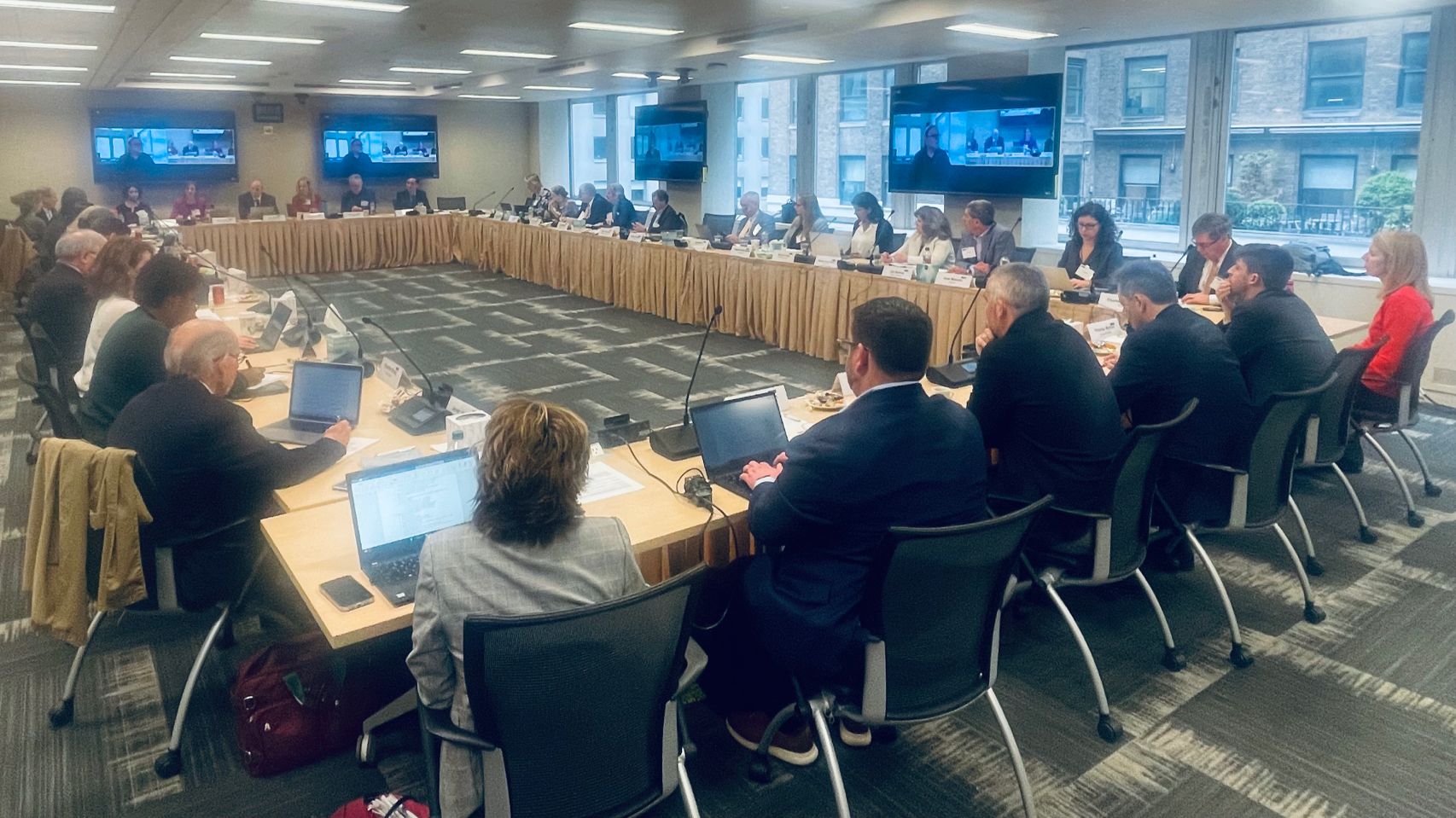
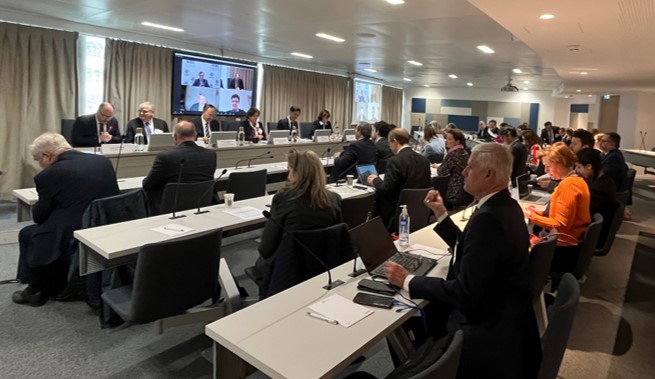
The International Ethics Standards Board for Accountants (IESBA) held a series of four global roundtables to obtain stakeholder input to help shape the development of new ethics and independence standards for sustainability reporting and assurance.
The all-day roundtables, held in person in Paris, France (March 24), Sydney, Australia (March 30), Singapore (April 3), and New York (April 6), allowed stakeholders to convey relevant information to be addressed in developing the new standards. They were attended by members of the investor and corporate governance communities, C-suite executives, data aggregators, rating agencies, regulators and oversight bodies; international policy-making organizations; national standard setters; preparers; professional accountancy organizations; and sustainability assurance providers, including accountancy firms and independent providers outside the accountancy profession.
The IESBA announced in June 2022 its commitment to take timely action to develop fit-for-purpose, globally applicable ethics and independence standards as a critical part of the infrastructure needed to support transparent, relevant, and trustworthy sustainability reporting and assurance. Importantly, this strategic commitment sets up the IESBA’s ethics and independence standards as the third pillar to trustworthy sustainability reporting and assurance, alongside the standards being developed by the International Sustainability Standards Board (ISSB) and the International Auditing and Assurance Standards Board (IAASB).
In December 2022, the IESBA approved two new standard-setting projects that will develop profession-agnostic ethics and independence standards for sustainability reporting and assurance and on the related topic of “use of experts.”
Professional accountants have an active role to play in determining the way climate change information is reported in the upcoming 2021 reporting cycle and is enhanced in future years.
In a new statement released today, IFAC continues to advocate and support the profession’s role in enabling climate action by providing transparency and insights on the financial impacts of climate change.
In this statement, IFAC:
Summarizes the information concerns of investors, regulators, and policy makers.
Reviews current standard-setter responses.
Recommends how, and the extent to which, companies and accountants can address these concerns in the 2021 reporting cycle.