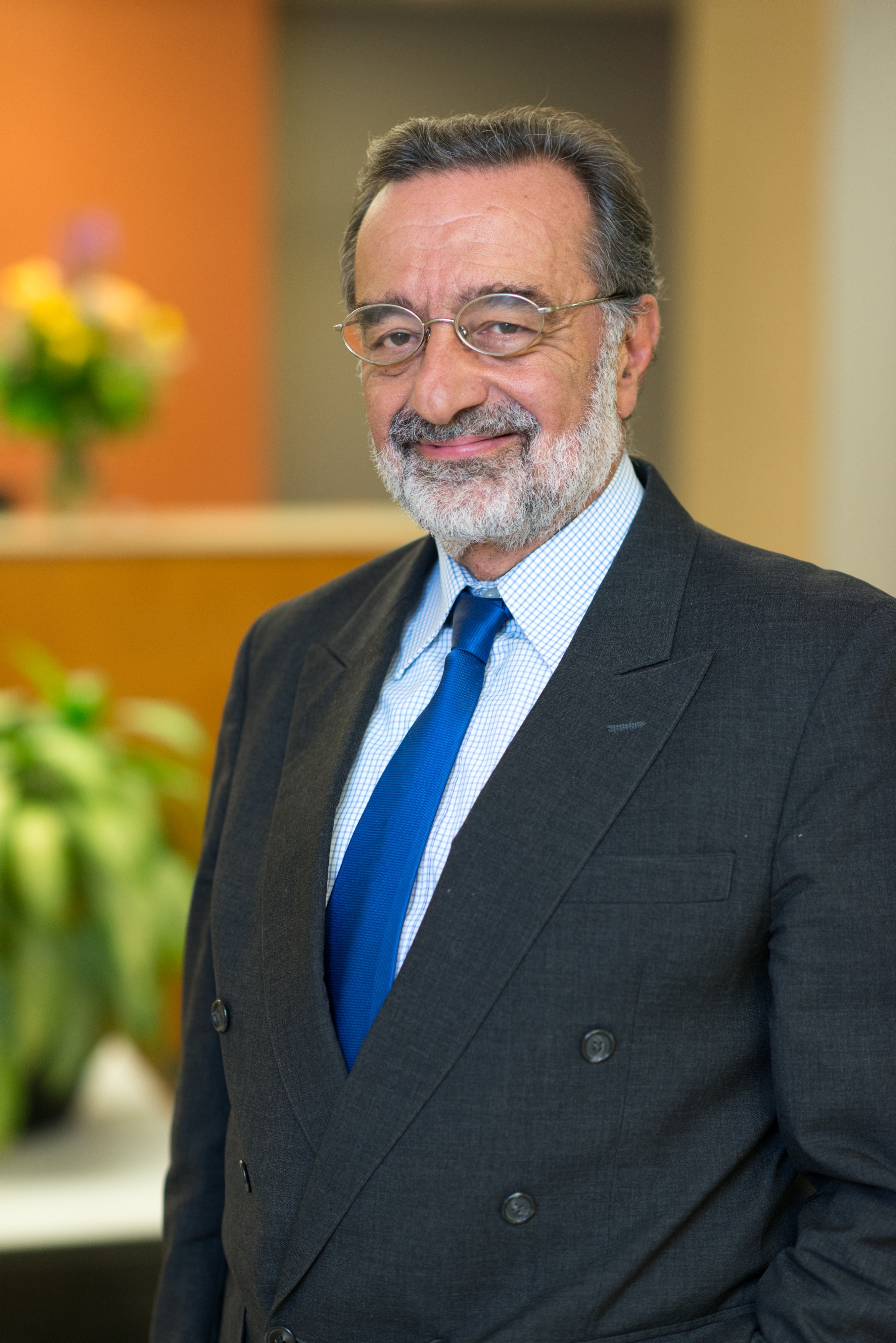
Ethics Standard Setting in the Public Interest
In her introduction of Dr. Thomadakis, panel moderator and IFAC President Olivia Kirtley cited the following statement from his 2009 speech entitled "Estonia" given during his tenure as chairman of the Public Interest Oversight Board (PIOB):
"To do the accounts of one entity well is indeed a matter of private interests. To do all accounts well, so that entities can compete with one other and so that outsiders can compare the outcomes of competition with a common yard stick, is a matter of public interest. In other words, the ability to ensure that all accountants maintain high quality standards produces social value add."
Good morning ladies and gentlemen, dear colleagues.
Let me start by saying that I am very happy to be here today to congratulate the PIOB on its 10th anniversary—and in particular to congratulate its members and staff on bringing the PIOB to that state of being an institution of oversight. It is one thing to start a venture, but to standardize and institutionalize it is something else. My warm congratulations to all of you.
Now, let me offer a few thoughts about the IESBA's Code of Ethics for Professional Accountants. The Code is principles-based for global use. The Code is widely adopted and used around the world in more than 100 jurisdictions. Although we are not quite at 110 jurisdictions as the ISAs or 116 jurisdictions as the IFRSs, we are in quick pursuit of similar global adoption levels. And of course the 27 transnational global audit firms are also already applying the Code. This means that the Code is quite powerful and influential.
The Code applies to not only professional accountants in public practice, but to all professional accountants, including those in private industry, the public sector, academia, and elsewhere. This is an important component of the Code, and it can sometimes be a neglected or overlooked area. But it should not be. The corporate world and the ethical responsibilities of the professional accountants who operate in it are of critical importance to a trustworthy financial reporting supply chain.
The ultimate objective of the Code is to shape behavior—to raise the bar of ethical attitudes. So it seems to me that ethical norms must be sturdy long-term constructs and should not be restrained by short-term considerations. When designing the Code, therefore, we think of the long-term horizon and strive to put together clear and durable constructs.
I share and echo PIOB Chairman Eddy Wymeersch's comment that the Code is a public good. I say this not only in the sense of it being implemented by end users, but also as an example. There is a need for ethics codes for groups beyond just accountants and those in auditing practice. There is a strong need for corporate ethics, including a code of ethics for stewards of financial institutions, as just an example. So it seems to me that the IESBA Ethics Code can radiate as an example to other areas that could use it as a basis for their own behaviors or codes.
One of the major responses by the IESBA to the public interest that is very recent and happening now is our Structure of the Code Project. It involves a large innovation of the Code in response to a widely acknowledged need for clarity, usability and enforceability. In a sense, the Ethics Code is going through a similar type of change as undertaken by the IAASB on its ISAs under the Clarity Project a few years back. We believe completion of the restructuring of the Code will make a major contribution to the public interest not only in terms of effective implementation but also in terms of its wider global adoption. Accordingly, we are devoting a lot of attention, resources and effort to the Code under its new format.
Other projects of the IESBA that are underway include the well-known Non-Compliance with Laws and Regulations Project—commonly referred to as NOCLAR. This proposed standard defines expectation of action—and charts a pathway to such action—for auditors and all professional accountants when faced with the ethical dilemma of breaking confidentiality and acting in the public interest.
We are also working on another important project dealing with Safeguards. This aims to enhance the conceptual framework approach of the Code and the effectiveness of safeguards when used to address threats to independence and generally to the compliance with the Code's Fundamental Principles.
In addition, our project on Long-Association, addresses threats to auditor independence due to familiarity and enhances a "fresh look" by auditors through auditor rotation.
Finally, we are working to review Part C of the Code—covering Professional Accountants in Business—which, as I mentioned earlier, addresses a very important segment of the global accountancy profession.
All these projects together will represent a radical refurbishing of the Code. Our management challenge is to address these matters in a coordinated fashion—not piecemeal—so that it all comes together at the end of 2017. The importance of doing so reflects, in part, the general concerns of users-at-large of the Code (indeed of any standards) about burden and confusion arising from continuous rule-changes. The totality of this work, I believe, will make a significant contribution to the international public interest at this time.
Now, let me say a few words about our relationship with stakeholders. Consultation is, of course, an important part of our due process, and we do issue formal consultation papers and exposure drafts for public comment. But besides that we undertake extensive outreach—and we want to further develop and grow our strategy for relationship with stakeholders. This is with not only regulators, audit oversight bodies and the accounting firms, but importantly with investors, preparers and those charged with governance as they are equally critical stakeholders with essential perspectives and needs.
In this regard, I also want to mention the national standard setters. They are an extremely valuable source of input to our work, particularly as they provide viewpoints from their perspective when examining adoption and implementation of the Code at the national level.
Finally, let me say that I feel—and have done so for a long time—that complex reality on the ground is also a very important 'stakeholder'. We really have to know what is going on in the audit market, in the regulatory landscape, and in terms of actual behavior from evidenced-based research and from IFIAR inspection finding, to name a few. We all must stay cognizant of the reality in which we operate, so that change can be both relevant and aspirational.
Let me conclude by saying that our relationship with the PIOB is of course very important. We will continue to nurture it in a coordinated fashion, so that our interaction on specific issues is effective. However, I believe we should also interact on matters of policy, and on direction for forward strategies. Having been on both sides of the table, I believe this would be a very important step forward. I know all are willing and capable.
Thank you.